Examples of Alliterationin the Story Zen and the Art of Faking It
 First edition | |
| Author | Robert 1000. Pirsig |
|---|---|
| Country | United States |
| Language | English |
| Genre | Philosophical fiction, Autobiographical novel[1] |
| Published | 1974 (William Morrow and Company) |
| Media type | Impress (hardcover and paperback) |
| Pages | 418 pp |
| ISBN | 0-688-00230-vii |
| OCLC | 673595 |
| Dewey Decimal | 917.3/04/920924 B |
| LC Course | CT275.P648 A3 1974 |
| Followed past | Lila: An Inquiry into Morals |
Zen and the Art of Motorcycle Maintenance: An Inquiry into Values is a book by Robert Yard. Pirsig first published in 1974. It is a work of fictionalized autobiography, and is the starting time of Pirsig'southward texts in which he explores his "Metaphysics of Quality".
Pirsig received 121 rejections before an editor finally accustomed the book for publication—and he did so thinking it would never generate a profit. It was subsequently featured on best-seller lists for decades, with initial sales of at least 5 one thousand thousand copies worldwide.[2] The title is an apparent play on the title of the 1948 book Zen in the Art of Archery past Eugen Herrigel. In its introduction, Pirsig explains that, despite its title, "it should in no mode exist associated with that great body of factual information relating to orthodox Zen Buddhist practice. Information technology's not very factual on motorcycles, either."
Structure [edit]
Co-ordinate to Edward Abbey, the book is a fictionalized autobiography of a 17-day journey that Pirsig made on a motorcycle from Minnesota to Northern California forth with his son Chris.[1] The story of this journeying is recounted in a offset-person narrative, although the writer is not identified. Male parent and son are besides accompanied, for the kickoff nine days of the trip, by close friends John and Sylvia Sutherland, with whom they office ways in Montana. The trip is punctuated past numerous philosophical discussions, referred to as Chautauquas by the writer, on topics including epistemology, the history of philosophy, and the philosophy of science.
Many of these discussions are tied together by the story of the narrator'south own by self, who is referred to in the third person as Phaedrus (later on Plato'south dialogue). Phaedrus, a teacher of creative and technical writing at a pocket-size college, became engrossed in the question of what defines expert writing, and what in full general defines skillful, or "Quality", which he understands similar to Tao. Phaedrus'southward philosophical investigations eventually drove him insane, and he was subjected to electroconvulsive therapy, which permanently changed his personality.
Towards the end of the book, Phaedrus's strong and unorthodox personality, presented equally dangerous to the narrator, begins to re-sally and the narrator is reconciled with his past.
Writing [edit]
In a 1974 interview with National Public Radio, Pirsig stated that the book took him four years to write. During two of these years, Pirsig continued working at his job of writing computer manuals. This caused him to fall into an unorthodox schedule, waking up very early on and writing Zen from ii a.thousand. until 6 a.grand., then eating and going to his solar day job. He would slumber during his lunch interruption and then become to bed around vi in the evening. Pirsig joked that his co-workers noticed that he was "a lot less perky" than anybody else.[3]
Themes [edit]
Philosophical content [edit]
In the volume, the narrator describes the "romantic" approach to life of his friend, John Sutherland, who chooses not to learn how to maintain his expensive new motorbike. John but hopes for the all-time with his bike, and when problems do occur he often becomes frustrated and is forced to rely on professional mechanics to repair it. In contrast, the "classical" narrator has an older motorbike which he is normally able to diagnose and repair himself through the use of rational problem-solving skills.
In an instance of the classical approach, the narrator explains that one must pay continual attention: when the narrator and his friends come up into Miles City, Montana he notices the engine running roughly, a possible indication that the fuel/air mixture is besides rich. The side by side day he is thinking of this as he is going through his ritual to adjust the jets on his motorcycle's carburetor. During the adjustment, he notes that both spark plugs are black, confirming a rich mixture. He recognizes that the college meridian is causing the engine to run rich. The narrator rectifies this by installing new jets and adjusting the valves, and the engine runs well once more.
With this, the book details two types of personalities: those who are interested mostly in gestalt—romantic viewpoints focused on being in the moment, and non on rational assay—and those who seek to know details, understand inner workings, and master mechanics—viewpoints with application of rational analysis, vis-a-vis motorcycle maintenance.
The Sutherlands represent an exclusively romantic mental attitude toward the world. The narrator initially appears to prefer the classic arroyo. It later becomes credible that he understands both viewpoints and is aiming for the middle footing. He understands that technology, and the "dehumanized world" information technology carries with information technology, appears ugly and repulsive to a romantic person. He knows that such persons are determined to shoehorn all of life's experience into the romantic view. Pirsig is capable of seeing the beauty of applied science and feels good near mechanical work, where the goal is "to achieve an inner peace of mind". The volume demonstrates that motorcycle maintenance may exist dull and wearisome drudgery or an enjoyable and pleasurable pastime, depending on attitude.
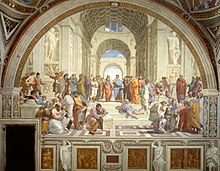
The narrator examines the mod pursuit of "Pure Truths", challenge information technology derives from the work of early Greek philosophers who were establishing the concept of truth in opposition to the force of "The Good". He argues that although rational thought may find a truth (or The Truth) it may never be fully and universally applicable to every individual's experience. Therefore, what is needed is an approach to life that is more inclusive and has a wider range of application. He makes a case that originally the Greeks did not distinguish between "Quality" and "Truth"—they were one and the same, arete—and that the divorce was, in fact, artificial (though needed at the time) and is now a source of much frustration and unhappiness in the globe, peculiarly overall dissatisfaction with modern life.
The narrator aims towards a perception of the world that embraces both sides, the rational and the romantic. This ways encompassing "irrational" sources of wisdom and understanding as well equally scientific discipline, reason and engineering. In particular, this must include bursts of creativity and intuition that seemingly come from nowhere and are not (in his view) rationally explicable. He seeks to demonstrate that rationality and Zen-similar "beingness in the moment" can harmoniously coexist. He suggests such a combination of rationality and romanticism tin can potentially bring a higher quality of life.
It has been noted that Pirsig'due south romantic/classical dichotomy resembles Nietzsche'south Dionysian/Apollonian dichotomy as described in The Birth of Tragedy. For instance, in his book The Person of the Therapist, Edward Smith writes, "In his popular novel ... Pirsig also addressed the Apollonian and Dionysian worldviews, naming them respectively classical understanding and romantic understanding."[4]
The self and relationships [edit]
Beverly Gross (1984) writes that Pirsig is seeking a synthesis of "the normal, everyday, functioning self with the person given to extremes, excesses, boundless heights, obsessions—our crazy self with our sane cocky, the greatness in us with our ordinariness". The exceptional in the narrator is represented past Phaedrus, who, despite the narrator's attempt to keep him in the past, pushes to the foreground of his mind toward the volume's end, threatening the narrator's stability and relationship with his son. However, the narrator'due south difficulties with his son during the journey too question whether giving upwardly parts of himself in substitution for "sanity" has even helped this relationship. Gross writes, "He relates to mechanical things, not to people. At that place is beauty in his recognition that personality inheres in motorcycles, riding gloves; there is sadness and sickness in his removal from the personality of people, his ain nearly notably". The Chautauquas, which emphasize the narrator'due south trend toward solitary thought and over-analysis, may reverberate his avoidance of the bug before him: his relationships and the resurrection of Phaedrus. To the extent that the narrator denies Phaedrus, the Chautauquas are practical, simply when he decides that he will admit himself to hospital once more, he realizes the undeniable presence of Phaedrus in him, and the Chautauquas are given over to those more abstruse topics.[5]
Gumption traps [edit]
According to the writer, A gumption trap is an event or mindset that can cause a person to lose enthusiasm and become discouraged from starting or continuing a project. The discussion "gumption" denotes a combination of mutual sense, shrewdness, and a sense of initiative.[half-dozen] Although the terminal of these traits is the primary victim of the "gumption trap," the first two suffer indirectly in that a reduction in initiative results in a reduction in effective activity and therefore inhibits 1's development of the get-go two traits. Persig goes on to inform his readers that the "trap" portion of the term refers to the positive feedback loop that the upshot or mindset creates: the reduction in the person's enthusiasm and initiative decreases both the person's likelihood of success in that project and the degree of success likely, thus doubly affecting the expected outcome of the person's efforts. The usual result farther discourages the person, whether information technology be a mere lack of success or a bigger outright failure complete with embarrassment and loss of the resource initially invested.
The specific term "gumption trap" was coined by Pirsig, and the associated concept plays an important part in the practical application of his Metaphysics of Quality.[ citation needed ]
Types [edit]
Pirsig refers to two types of gumption traps: setbacks, which arise from external/"exogenous" events, and hang-ups, which are the product of internal/"endogenous" factors such every bit a poor fit betwixt one's psychological state and the requirements of a project.
Setbacks [edit]
The nature of setbacks can vary considerably. For example, a minor setback might result from a small-scale injury. Larger setbacks include the lack of noesis that a certain procedural step or other status is necessary for a project's success: If one attempts to keep working despite the lack of knowledge that this obstacle exists (let lonely how to bargain with information technology), one's lack of progress may prompt one to take long breaks from the project, to focus one's attention on other endeavors, or even to lose interest in the project birthday. Pirsig suggests preventing these kinds of gumption traps past beingness irksome and meticulous, taking notes that might assist later, and troubleshooting in advance (e.yard., past laying out the requirements for one's projection in logical and/or conceptual social club and looking for procedural problems ranging from unaccounted-for prerequisites to gaps in 1'due south instructions or plans).
Hang-ups [edit]
Hang-ups stalk from internal factors that can make it the way of starting or completing a project. Examples of such hang-ups include anxiety, boredom, impatience, and the failure (often borne of excessive egotism) to realize that a) one might not have all the information necessary to succeed and/or b) sure aspects of the problem might be more or less important than one believes. Dealing with hang-ups can exist as simple as reducing hyperfocus on a specific aspect of a trouble by taking a short pause from working on the problem or that specific attribute of information technology.
Pirsig notes several aspects of hang-ups.
- Affective (i.e. receptive or dynamic) agreement or "value traps": these can be described generally as an inability or reluctance to re-evaluate notions due to a commitment to previous values. On the whole these types of bug can be addressed by (1) rediscovering facts as they arise; (2) recognizing that the facts are bachelor and apparent; (three) deliberately slowing down to allow unstructured processing of information; and (4) reassessing the weight attached to the current knowledge.
-
- Egotism may encourage i to believe misleading data or disbelieve a potentially inconvenient fact. Appropriate recourses include humility, modesty, attentiveness and skepticism.
- Feet may preclude the conviction necessary to brainstorm a project or the cocky-assurance needed to patiently work through a project systematically. Appropriate recourses include inquiry, study and preparation prior to commencement the project; detailing the predictable steps required to attain the task; and understanding the personhood and fallibility of professionals.
- Boredom may cause sloppy work and inattention to particular. Advisable recourses include taking a intermission to permit interest in the project to rebuild or ritualizing common practices. Pirsig notes that at the starting time sign of boredom, it is important to end piece of work immediately.
- Impatience, like boredom, may cause sloppy work and inattention to detail. Appropriate recourses include allowing indefinite time for the projection and value flexibility to rediscover aspects of the projection.
- Cerebral understanding or "truth traps": these can exist described as misunderstanding the feedback of a given action.
-
- Reliance on yep-no duality may cause misinterpretation of results. Pirsig notes the concept of mu and suggests the respond to a detail question may indicate that the question does non match the situation. An advisable recourse may exist to reconsider the context of the research.
- Psychomotor beliefs or "muscle traps": these surround the interaction of the environs, machinist and machine.
-
- Inadequate tools may pb to a feeling of frustration. Appropriate recourses include proper equipment acquisition.
- Environmental factors may lead to frustration including inadequate lighting, temperature extremes and physically uncomfortable positions.
- Muscular insensitivity or lack of proprioception may lead to a disproportionate amount of force being applied to a textile that leads to frustration. Misunderstanding of different tolerances of various materials may lead to broken parts or inadequate tension.
Reception [edit]
At the time of its publication, Christopher Lehmann-Haupt, in his volume review for The New York Times, wrote,
I at present regret that I lack the expertise in philosophy to put Mr. Pirsig's ideas to a proper test, for this book may very well be a profoundly important one—a great one fifty-fifty—full of insights into our most perplexing contemporary dilemmas. I just don't know. But whatever its true philosophical worth, it is intellectual entertainment of the highest lodge.[seven]
Since then, Zen and the Art of Motorcycle Maintenance has go the all-time-selling philosophy book of all time.[8]
See besides [edit]
- Dehumanized
- Lila: An Enquiry into Morals
- Quality (philosophy)
- Pirsig's metaphysics of Quality
References [edit]
- ^ a b Abbey, Edward (March 30, 1975). "Novelistic autobiography, autobiographical novel? No matter". The New York Times.
- ^ "Robert Pirsig, Author of 'Zen and the Art of Motorbike Maintenance,' Dead At 88". Huffington Mail. Reuters. 25 April 2017.
- ^ "'Zen and the Fine art of Motorcycle Maintenance Author' Robert Pirsig" at NPR online audio archive
- ^ Smith, Edward W. L. (2003). The Person of the Therapist, McFarland & Company Inc, p. 97.
- ^ Gross, Beverly (1984). "'A Mind Divided against Itself': Madness in 'Zen and the Art of Motorcycle Maintenance'". The Journal of Narrative Technique. fourteen (3): 201–213. JSTOR 30225102.
- ^ "gumption". thefreedictionary.com. Retrieved xi May 2014.
- ^ "The Motorcycles of Your Heed; Books of The Times". The New York Times. April 16, 1974.
- ^ McWatt, Anthony (October 2017). "Robert Pirsig & His Metaphysics of Quality". Philosophy Now.
External links [edit]
- Audio: 1992 NPR Interview with Pirsig
- Guardian interview from 2006: Brusque version and Long version
Source: https://en.wikipedia.org/wiki/Zen_and_the_Art_of_Motorcycle_Maintenance
0 Response to "Examples of Alliterationin the Story Zen and the Art of Faking It"
Post a Comment